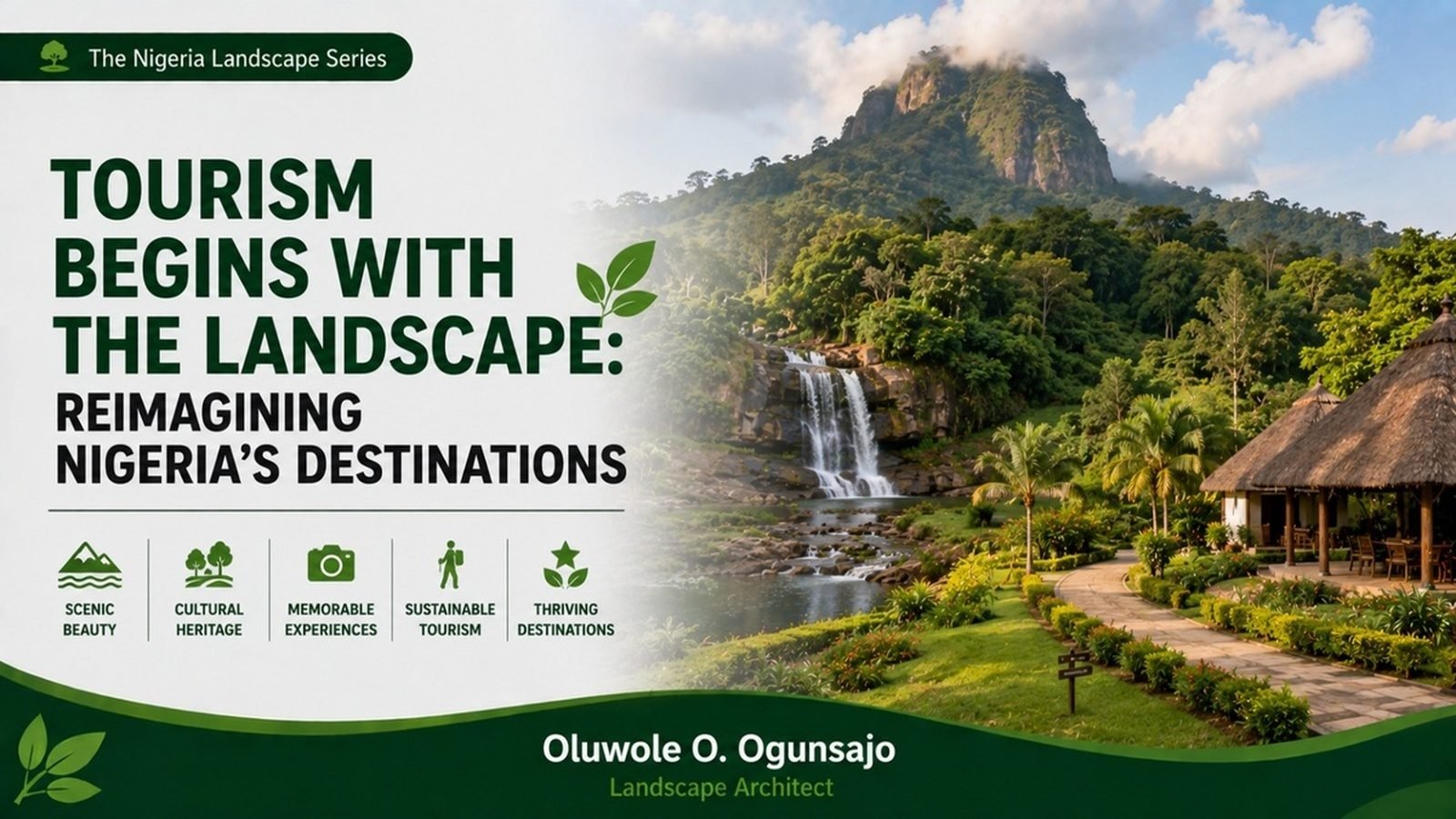
Nigeria is richly endowed with some of Africa's most extraordinary tourism landscapes - from the remarkable meeting point of the warm and cold springs at Ikogosi Warm Springs Resort in Ekiti State to the rolling hills of Obudu, the dramatic granite formations of Idanre, the pristine beaches of Lagos, the ancient walls of Kano and the rich biodiversity of Yankari Game Reserve. Complemented by vast forests, savannahs, wetlands, waterfalls, coastlines and cultural heritage sites, these remarkable landscapes represent a tourism wealth that many nations would envy.
Yet, despite this abundance, Nigeria remains significantly underrepresented on the global tourism map. The conversation often revolves around infrastructure, security, marketing or hospitality. While these are undeniably important, one critical element continues to receive far less attention than it deserves.
Tourism begins with the landscape.
Before visitors book a hotel, enter a museum or purchase souvenirs, they first experience the quality of the environment. They notice the roads leading to attractions, the cleanliness of public spaces, the beauty of the surroundings, the comfort of walking trails, the availability of shade, the quality of parks, the visual identity of communities and the overall experience created by the landscape.
The landscape is not simply the backdrop of tourism. It is often the destination itself.
Nigeria's Tourism Is Missing Its Foundation
Many of Nigeria's tourism destinations possess remarkable natural and cultural value but suffer from poor landscape planning and environmental management.
Visitors frequently encounter neglected entrances, poorly maintained gardens, eroded pathways, inadequate signage, indiscriminate waste disposal, damaged ecosystems and a lack of public spaces that encourage exploration and relaxation. Valuable waterfronts remain inaccessible, urban parks receive minimal investment, and many heritage sites exist without carefully designed landscapes that enhance visitor experience.
The challenge extends beyond aesthetics.
Poor drainage damages recreational facilities during the rainy season. Uncontrolled development degrades scenic views. Native vegetation disappears due to inappropriate planting schemes, while poorly planned commercial activities create visual clutter around heritage sites.
In many cases, tourism planning focuses on constructing buildings while overlooking the spaces between them - the landscapes where visitors actually spend much of their time.
The result is that destinations with enormous potential fail to deliver memorable experiences capable of attracting repeat visitors or international recognition.
Lessons from Ikogosi
During my time as the Landscape Manager at Ikogosi Warm Springs Resort in Ekiti State, I witnessed firsthand how thoughtfully designed and well-managed landscapes shape visitors' experiences. While many guests came to witness the remarkable meeting point of the warm and cold springs, what often determined how long they stayed, how they interacted with the environment, and the memories they carried home was the quality of the surrounding landscape. Indeed, landscape is the foundation of sightseeing and tourism; without an attractive, functional and memorable landscape, even the most remarkable natural attractions struggle to realize their full tourism potential.
Well-maintained gardens, expansive lawns, scenic viewpoints and carefully curated outdoor spaces transformed the resort's natural setting into a complete destination experience. During my tenure, I conceptualized the Forest Nature Park, which was integrated into the resort's landscape to diversify visitor experiences, encourage nature-based recreation and enrich the destination's overall appeal. That experience reinforced a conviction that has guided my professional career ever since: tourism does not begin at the hotel reception or the ticket gate - it begins with the landscape
My experience at Ikogosi convinced me that tourism destinations succeed not merely because of their natural attractions, but because of how those attractions are planned, designed, interpreted and managed through landscape. Yet, Ikogosi is not an isolated case. Across Nigeria, many of our iconic tourism destinations possess extraordinary natural and cultural assets but have yet to fully harness the transformative power of landscape-led planning.
Consider Idanre Hills in Ondo State, one of Nigeria's most spectacular cultural and natural landscapes. Its inscription on UNESCO's World Heritage Tentative List in 2007 affirms its outstanding heritage value and global significance. Renowned for its dramatic granite outcrops, ancient hilltop settlement and rich cultural history, Idanre possesses all the attributes of a world-class tourism destination. However, unlocking its full potential requires more than preserving its remarkable geological features; it demands strategic landscape-led planning and management. Carefully designed arrival plazas, scenic viewing platforms, shaded rest areas, nature trails, indigenous planting, erosion-control measures and universally accessible public spaces would greatly enrich the visitor experience while safeguarding the integrity of the landscape. Such interventions would encourage longer visitor stays, increase tourism spending, strengthen environmental conservation and position Idanre Hills as one of Africa's leading landscape tourism destinations.
More than Beauty: Why Landscape Drives Tourism
The quality of a destination's landscape directly influences its economic competitiveness.
Globally, tourists increasingly seek destinations that provide beautiful, walkable, environmentally responsible and memorable outdoor experiences. A well-designed landscape encourages visitors to stay longer, spend more, take photographs, recommend destinations to others and return in the future.
For Nigeria, improving landscape quality can stimulate local economies by creating employment opportunities for landscape architects, horticulturists, arborists, nursery operators, environmental planners, tour operators, maintenance professionals and local artisans. Better public spaces also support nearby businesses including restaurants, hotels, transport providers and recreational services.
The environmental benefits are equally significant.
Thoughtfully designed landscapes improve biodiversity, reduce soil erosion, manage stormwater naturally, moderate urban temperatures, enhance air quality and strengthen climate resilience. Green infrastructure such as rain gardens, bioswales, urban forests and restored wetlands can simultaneously improve environmental performance and enrich visitor experiences.
Socially, quality landscapes contribute to healthier and more inclusive communities.
Parks, waterfronts and recreational spaces encourage physical activity, strengthen community interaction and provide safe environments where families and visitors can connect with nature. Attractive public spaces also foster civic pride, reinforce cultural identity and create memorable settings for festivals, markets and cultural celebrations.
Tourism is therefore not merely about attracting visitors. It is about creating places where residents themselves enjoy living.
When local communities value their environment, visitors are far more likely to value it as well.
What Successful Tourism Nations Understand
Around the world, successful tourism destinations increasingly recognize that landscape architecture is fundamental to national tourism development.
Singapore has transformed itself into a global tourism destination through its vision of becoming a "City in Nature." Parks, gardens, waterfront promenades, ecological restoration projects and carefully designed green corridors are integrated throughout the city. Destinations such as Gardens by the Bay demonstrate how landscape design can become a tourism attraction in its own right while supporting biodiversity and climate resilience.
The Netherlands has successfully combined water management with landscape planning. Rather than treating flood control solely as an engineering challenge, Dutch projects integrate rivers, wetlands, parks and recreational spaces into multifunctional landscapes that protect communities while creating attractive visitor destinations.
Case Study: Lapa Rios Lodge - Designing Tourism with Nature
Consider Lapa Rios Lodge, a luxury eco-lodge on Costa Rica’s Osa Peninsula and an exemplary model of low-impact tourism development. Rather than clearing the rainforest to accommodate infrastructure, the lodge integrates its buildings within the existing landscape.
Elevated timber villas and structures on stilts minimize disturbance to the forest floor, while much of the native rainforest canopy remains intact. The use of timber, thatched roofs, open layouts and large private decks allows the buildings to harmonize with their surroundings while taking advantage of natural ventilation and views of the rainforest.
The result is more than an environmentally sensitive resort; the landscape itself becomes part of the tourism experience. Visitors experience the rainforest as an integral component of their stay, while the surrounding reserve provides habitat for diverse wildlife, including monkeys, sloths, scarlet macaws and toucans.

Lapa Rios Lodge, Costa Rica
For Nigeria, Lapa Rios demonstrates an important principle: tourism infrastructure does not have to replace the landscape to create a successful destination.
In forest, mountain, coastal and wildlife destinations, mature trees, natural landforms, drainage patterns and wildlife habitats can be retained and incorporated into development. Indigenous vegetation and local materials can further strengthen a destination’s sense of place.
This is the essence of Design with Nature - working with ecological systems rather than replacing them.
Nigeria’s future tourism destinations should therefore not simply be built in nature. They should be designed around, within and with the landscape itself.

Lapa Rios Lodge, Costa Rica
The United Arab Emirates has invested heavily in transforming harsh desert environments into internationally recognized public landscapes. Waterfront developments, urban parks, desert conservation areas and destination landscapes have diversified tourism beyond shopping and luxury hospitality.
Closer to home, Rwanda has demonstrated how environmental restoration, clean public spaces and carefully managed landscapes can significantly improve tourism competitiveness. Investments around national parks, urban green spaces and community landscapes have enhanced the country's global image while supporting conservation and local livelihoods.
These countries differ in geography, culture and economic capacity, yet they share one important lesson: tourism flourishes when landscapes are intentionally planned, designed and maintained.
The Missing Profession in Tourism Development
Landscape architecture offers a comprehensive approach to tourism development that extends beyond beautification.
The profession integrates environmental science, ecology, planning, engineering, horticulture, cultural heritage and design to create places that are functional, resilient and memorable.
For tourism destinations, landscape architects evaluate how visitors move through spaces, where they gather, what they see, how ecosystems function and how infrastructure can coexist with nature.
A professionally designed tourism landscape considers accessibility, safety, biodiversity, climate adaptation, visual quality, cultural identity and long-term maintenance from the earliest stages of planning.
This means protecting natural ecosystems rather than replacing them. It means restoring degraded landscapes instead of merely constructing new facilities. It means using native plant species that reflect local identity while reducing maintenance costs. It means designing pathways, viewing platforms, interpretation centres and public spaces that improve visitor experience without compromising ecological integrity.
Landscape architecture also helps destinations respond to climate change.
As extreme rainfall, flooding, erosion and heat become increasingly common across Nigeria, tourism sites require nature-based solutions that reduce environmental risks while enhancing recreational value. Green infrastructure can manage stormwater naturally, stabilize slopes, improve water quality and create attractive outdoor environments simultaneously.
Equally important is destination identity.
Every successful tourism destination possesses a distinctive sense of place. Landscape architecture helps express local culture through planting design, materials, public art, open space planning and the preservation of natural and cultural features that make each location unique.
Rather than replicating imported landscape styles, Nigerian tourism destinations should celebrate indigenous vegetation, traditional materials, local craftsmanship and regional ecological character.
This approach creates authentic experiences that cannot be replicated elsewhere.
Building Nigeria's Next Generation of Tourism Destinations
Nigeria has an opportunity to reposition tourism through strategic landscape investment.
First, landscape architecture should become a mandatory component of tourism master planning for federal, state and local tourism projects. Every major destination deserves a professionally prepared landscape plan that guides development, conservation and long-term management.
Second, governments should prioritize the restoration of existing tourism landscapes before creating entirely new attractions. Revitalizing neglected parks, waterfronts, heritage sites and recreational areas often delivers greater value than starting from scratch.
Third, destination planning should embrace climate-responsive landscape design. Green infrastructure, sustainable drainage systems, urban forestry and ecological restoration should become standard practice rather than optional additions.
Fourth, greater collaboration is needed among landscape architects, architects, engineers, environmental scientists, tourism planners, conservation experts and local communities. Tourism destinations perform best when multidisciplinary teams work together from project inception.
Fifth, maintenance must receive the same attention as construction. Beautiful landscapes cannot remain attractive without consistent management. Sustainable maintenance plans, adequate funding and trained personnel should be incorporated into every tourism investment.
Sixth, Nigeria should promote the use of indigenous plant species and locally sourced landscape materials wherever appropriate. Native landscapes strengthen biodiversity, reduce maintenance costs and reinforce cultural identity while creating unique visitor experiences.
Finally, investment in education and professional awareness is essential. Policymakers, investors, developers and tourism authorities must recognize landscape architecture as a strategic discipline that contributes directly to economic development, environmental resilience and destination competitiveness.
It All Begins with the Landscape
Nigeria's tourism future will not be determined solely by hotels, airports or advertising campaigns. It will be shaped by the quality of the landscapes that welcome visitors, tell our stories and showcase our natural and cultural heritage.
Every destination begins with an impression. Every memorable journey begins with a place. Every great place begins with thoughtful landscape planning and design.
As Nigeria seeks to diversify its economy, strengthen climate resilience and build globally competitive tourism destinations, landscape architecture must move from the margins of development discussions to the center of national policy.
The opportunity before us is not simply to develop more tourist attractions. It is to create landscapes that inspire, educate, protect nature, celebrate culture and generate lasting economic prosperity.
From Ikogosi to Idanre Hills, from Yankari to Obudu, Nigeria's greatest tourism assets are landscapes. Our challenge is no longer discovering them - it is planning, designing and managing them to meet global standards. Because when we invest in our landscapes, we are not merely beautifying our environment - we are building destinations the world will want to experience.
After all, tourism begins with the landscape.
Oluwole O. Ogunsajo is a Nigerian Landscape Architect, tourism destination revitalization expert, and Founder of The Nigeria Landscape Series. His work focuses on landscape planning, sustainable urban development, and the transformation of tourism and leisure environments. Through research, professional practice, and thought leadership, he champions landscape-driven solutions that enhance environmental resilience, improve the quality of public spaces, and support Nigeria's sustainable development agenda.
The Nigeria Landscape Series is an educational and professional publication dedicated to promoting landscape architecture, environmental stewardship, resilient infrastructure, and sustainable development across Nigeria.