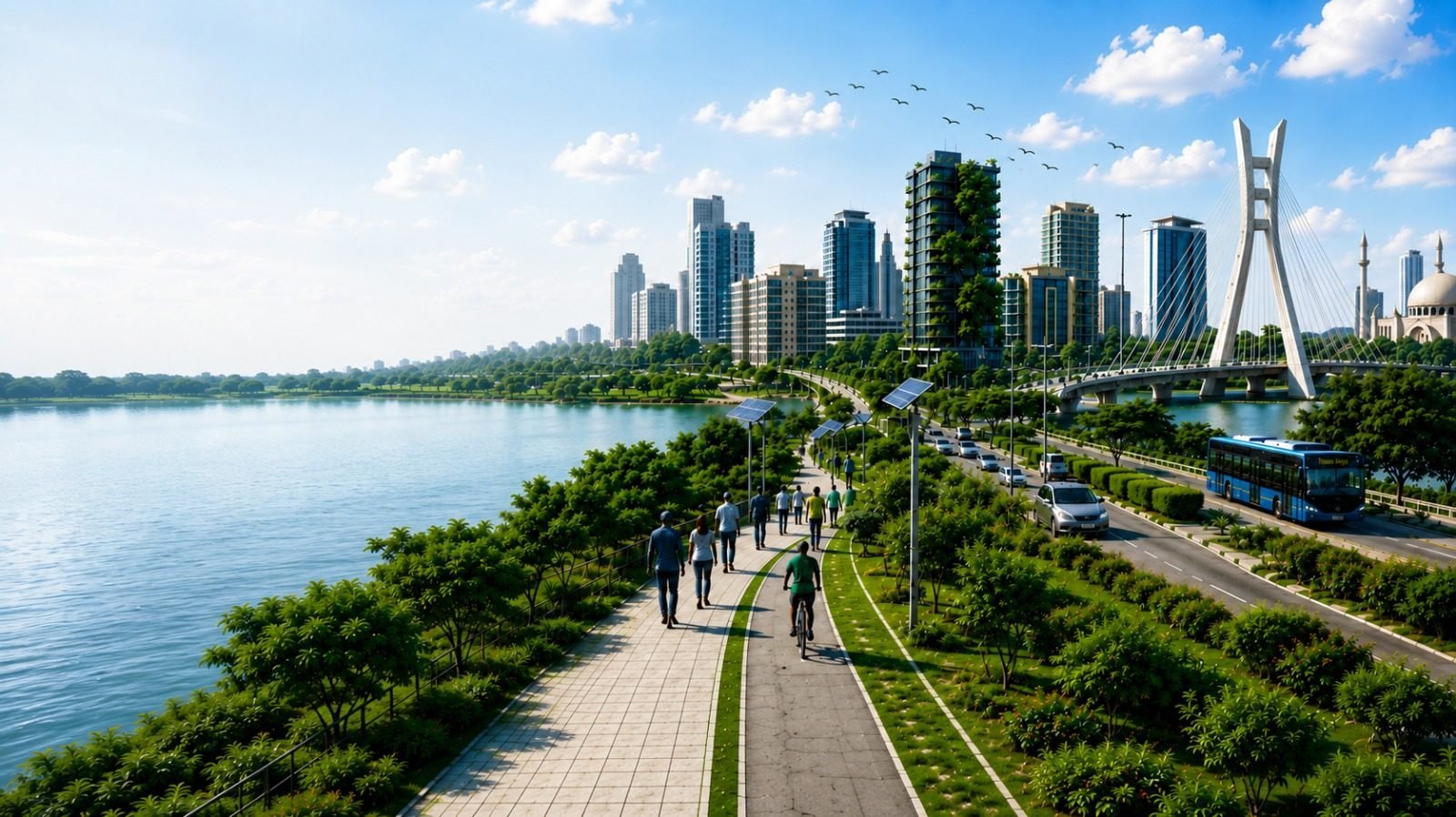
Nigeria stands at a defining moment in its development journey. Across the country, rapid urbanization, population growth, climate change, and environmental degradation are reshaping the landscapes upon which our economy, communities, and future depend. From the bustling coastal city of Lagos and the expanding metropolitan centres of Abuja, Kano, and Port Harcourt to the mangrove forests of the Niger Delta, the savannahs of the Middle Belt, and the fragile ecosystems of the North-East, the natural systems that sustain our nation are under unprecedented pressure.
Flooding has become a recurring disaster in many cities. Erosion continues to consume productive land and threaten infrastructure. Urban heat is intensifying as trees disappear and concrete replaces vegetation. Wetlands are being reclaimed without adequate planning. Biodiversity is declining, while public green spaces are shrinking in many urban centres. These challenges are no longer distant environmental concerns; they are economic, social, and public health issues that affect every Nigerian.
Yet, within these challenges lies one of Nigeria's greatest opportunities.
The future of Nigeria will not be determined solely by the buildings we construct, the highways we pave, the industries we establish, or the technologies we develop. It will also be shaped by how we plan, protect, restore, and transform the landscapes upon which development takes place. A nation that neglects its landscapes ultimately undermines its own prosperity, resilience, and quality of life.
This conviction forms the foundation of The Nigeria Landscape Series - a platform dedicated to exploring how landscape architecture, landscape planning, green infrastructure, ecological restoration, environmental stewardship, and sustainable land management can contribute to building a more resilient, prosperous, and beautiful nation.
At its core, the series is driven by a simple yet powerful belief: a truly great nation is measured not only by the strength of its economy but also by the quality of its environment, the health of its ecosystems, and the well-being of its people.
For decades, development has often been viewed primarily through the lens of physical infrastructure. Roads, bridges, buildings, airports, and industrial estates have rightly been recognized as essential components of national growth. However, the landscapes that support these developments have frequently received far less attention. Green spaces are often treated as decorative additions rather than critical infrastructure. Trees are removed with little consideration for their environmental value. Rivers are encroached upon, wetlands reclaimed, and natural ecosystems fragmented in pursuit of short-term development objectives.
This approach is increasingly proving unsustainable.
Around the world, countries are redefining what development means. Increasingly, governments recognize that economic growth and environmental sustainability are not competing priorities but complementary ones. Healthy landscapes support healthy economies. Well-designed public spaces attract investment. Urban forests improve public health. Restored wetlands reduce flood risks. Green infrastructure lowers maintenance costs, enhances climate resilience, and improves the overall quality of urban life.
Landscape transformation has therefore become a strategic national investment rather than merely an environmental initiative.
Several countries provide inspiring examples of what is possible. Singapore, once a densely populated island facing severe environmental constraints, deliberately integrated nature into every aspect of its development strategy. Through long-term planning, consistent public investment, and strong environmental governance, it transformed itself into one of the world's leading green cities. Tree-lined streets, interconnected parks, green roofs, ecological corridors, and carefully protected water catchments have become defining features of its national identity.
Similarly, cities such as Copenhagen, Melbourne, Curitiba, and Vancouver have demonstrated how landscape-led planning can reduce flooding, improve mobility, enhance public health, increase property values, and create more liveable communities.
These examples are important not because Nigeria should simply replicate them, but because they demonstrate a universal truth: landscapes are not obstacles to development - they are fundamental drivers of sustainable development.
Nigeria possesses advantages that are equally remarkable.
Our nation is blessed with extraordinary ecological diversity. We possess tropical rainforests, mangrove ecosystems, freshwater wetlands, expansive savannahs, mountain ranges, coastal environments, river systems, and rich agricultural landscapes. Few countries possess such varied natural assets within a single national boundary.
Beyond our physical environment lies another extraordinary resource - our people. Nigeria is home to more than 200 million citizens whose creativity, resilience, innovation, and entrepreneurial spirit continue to drive progress despite enormous challenges. Combined with our cultural diversity and rich indigenous knowledge of land management, these assets position Nigeria to become a global leader in sustainable landscape development.
The question is therefore not whether Nigeria has the potential to become one of the world's greenest and most environmentally resilient nations.
The real question is whether we are prepared to make the strategic choices necessary to achieve that vision.
Imagine a Nigeria where major highway corridors are transformed into productive green landscapes that create employment, improve road safety, reduce erosion, sequester carbon, and enhance the visual identity of our nation.
Imagine cities where extensive urban tree planting reduces temperatures, improves air quality, lowers energy consumption, and creates healthier environments for millions of residents.
Imagine neighbourhood parks, waterfront promenades, botanical gardens, civic plazas, and recreational spaces becoming vibrant centres of community life, social interaction, tourism, and economic activity.
Imagine schools designed with outdoor learning environments that improve children's health and educational outcomes. Imagine hospitals surrounded by therapeutic landscapes that promote healing and well-being. Imagine residential estates where green infrastructure manages stormwater naturally while improving aesthetics and increasing property values.
Imagine industrial parks that integrate ecological restoration with economic productivity. Imagine degraded mining sites transformed into functional landscapes that support biodiversity and recreation. Imagine abandoned public spaces revitalized into thriving urban destinations.
Imagine flood-prone communities protected by restored wetlands instead of expensive concrete channels alone.
Imagine millions of young Nigerians finding meaningful careers in landscape architecture, environmental planning, urban forestry, horticulture, ecological restoration, nursery production, park management, environmental tourism, green construction, and climate adaptation.
This is not simply an environmental aspiration.
It is an economic strategy.
It is a public health strategy.
It is a climate resilience strategy.
It is a national development strategy.
Perhaps most importantly, it is a strategy for improving the everyday lives of ordinary Nigerians.
Landscapes are often misunderstood as empty spaces awaiting development. In reality, they are productive national assets. Healthy landscapes regulate water, improve air quality, support agriculture, conserve biodiversity, reduce disaster risks, provide recreational opportunities, strengthen mental health, and create attractive environments for businesses and investors.
Every mature tree planted today becomes future infrastructure.
Every restored wetland becomes natural flood protection.
Every public park becomes an investment in community well-being.
Every protected ecosystem strengthens national resilience.
Recognizing this reality requires a significant shift in perspective.
Government at all levels must begin integrating landscape planning into national, regional, and local development strategies. Landscape considerations should no longer be introduced after engineering designs have been completed. Instead, they should form part of the earliest stages of planning and decision-making.
The private sector also has a crucial role to play. Developers, financial institutions, corporate organizations, and investors increasingly recognize that high-quality landscapes create long-term economic value. Well-designed green environments attract businesses, improve employee productivity, increase property values, strengthen corporate identity, and enhance investment returns.
Professional collaboration is equally essential.
Landscape architects cannot transform Nigeria alone. Engineers, architects, urban planners, environmental scientists, ecologists, foresters, surveyors, policymakers, economists, public health professionals, and community leaders must work together toward shared objectives. Sustainable landscapes emerge from interdisciplinary thinking rather than isolated professional practice.
Citizens also have an indispensable role. Environmental stewardship begins at the community level. Protecting neighbourhood trees, maintaining public spaces, supporting environmental policies, participating in community greening initiatives, and developing greater appreciation for our natural heritage are responsibilities shared by every Nigerian.
Building a greener Nigeria is not solely the responsibility of government.
It is a national responsibility.
This is precisely why The Nigeria Landscape Series matters.
The series is far more than a collection of articles. It is intended to serve as a national conversation - one that highlights the critical relationship between landscapes and sustainable development while encouraging practical solutions, informed policymaking, professional collaboration, and public engagement.
Future editions will examine topics such as climate-resilient cities, green infrastructure, urban forestry, biodiversity conservation, sustainable campuses, transportation landscapes, ecological restoration, public parks, waterfront development, tourism landscapes, housing estates, environmental policy, and innovative landscapes from across Nigeria and around the world.
The objective is not merely to identify problems but to present opportunities, showcase successful case studies, and inspire meaningful action.
The journey toward a greener Nigeria will not happen overnight.
Transforming nations never does.
Every significant national transformation begins with a compelling vision, sustained leadership, and the willingness of citizens to embrace long-term thinking over short-term convenience.
Nigeria now has a unique opportunity to redefine what development means in the twenty-first century. Rather than allowing economic growth and environmental stewardship to exist in opposition, we can ensure they advance together. We can build cities that are cooler, cleaner, healthier, safer, and more resilient. We can restore degraded landscapes while creating employment and stimulating economic growth. We can design infrastructure that works with nature rather than against it. We can create public spaces that strengthen communities, celebrate our cultural identity, and improve quality of life.
Most importantly, we can leave future generations with a nation that is greener, more resilient, and more prosperous than the one we inherited.
Our ambition should not simply be to imitate the achievements of other countries. Nigeria must develop its own model of landscape excellence - one rooted in our unique environmental conditions, cultural diversity, indigenous knowledge, economic realities, and development aspirations.
The landscapes of Nigeria are among our greatest national assets. They shape our cities, sustain our agriculture, protect our biodiversity, support our economy, and define our identity. If managed wisely, they can become powerful engines of national transformation.
The future of Nigeria does not lie only in our industries, our technology, our natural resources, or our cities.
The future of Nigeria also lies in our landscapes.
And how we choose to shape those landscapes will help determine the nation we become.
Oluwole O. Ogunsajo is a Nigerian Landscape Architect, tourism destination revitalization expert, and Founder of The Nigeria Landscape Series . His work focuses on landscape planning, sustainable urban development, and the transformation of tourism and leisure environments. Through research, professional practice, and thought leadership, he champions landscape-driven solutions that enhance environmental resilience, improve the quality of public spaces, and support Nigeria's sustainable development agenda.
The Nigeria Landscape Series is an educational and professional publication dedicated to promoting landscape architecture, environmental stewardship, resilient infrastructure, and sustainable development across Nigeria.
© 2026 Oluwole O. Ogunsajo. All rights reserved.